
Exploring the Hampi Ruins: A UNESCO World Heritage Site and Its Ancient Temples
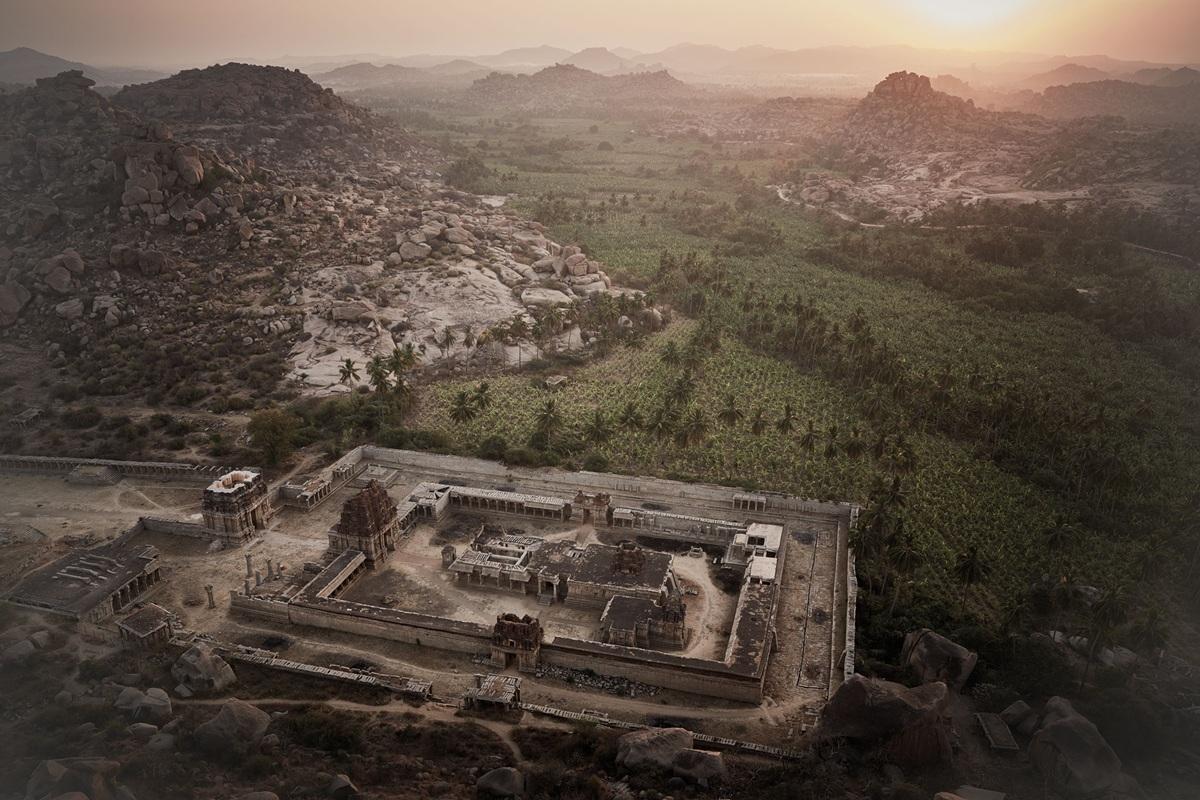
The Hampi Ruins stand as a timeless testament to the grandeur of ancient Indian civilization, drawing travelers from across the globe to witness their majestic beauty. Nestled in the heart of Karnataka, India, the Hampi Ruins encompass a sprawling landscape of crumbling temples, palaces, and fortifications that once formed the core of the Vijayanagara Empire. Recognized as a UNESCO World Heritage Site, the Hampi Ruins offer a glimpse into a bygone era where art, architecture, and spirituality intertwined seamlessly. Whether you're wandering through the intricate carvings of ancient temples or marveling at the strategic urban planning amid boulder-strewn hills, the Hampi Ruins captivate with their historical depth and scenic allure.
As you delve into the Hampi Ruins, you'll discover why this site has been preserved as a global treasure. The ruins, spread over more than 4,100 hectares along the Tungabhadra River, include over 1,600 surviving structures that highlight the empire's prosperity and cultural richness. From towering gopurams to ornate mandapas, the Hampi Ruins are a paradise for history enthusiasts, photographers, and spiritual seekers alike. In this comprehensive guide, we'll explore the history, key attractions, and practical tips for visiting the Hampi Ruins, ensuring you make the most of your journey to this UNESCO-listed wonder.
The Rich History of the Hampi Ruins
The history of the Hampi Ruins is deeply intertwined with the rise and fall of the Vijayanagara Empire, one of the most powerful Hindu kingdoms in South India. Founded in 1336 CE by brothers Harihara I and Bukka Raya, the empire emerged as a bulwark against invading forces from the north, particularly the Delhi Sultanate. The Hampi Ruins, originally known as Vijayanagara, served as the empire's capital and grew into a bustling metropolis by the 15th century. At its peak under rulers like Krishnadevaraya (1509-1529 CE), the city was home to half a million people, making it the second-largest city in the world after Beijing.
The origins of the Hampi Ruins predate the Vijayanagara period, with references in ancient texts like the Ramayana, where the area is linked to Kishkindha, the kingdom of the monkey god Hanuman. Archaeological evidence suggests human settlements here as early as the 1st century CE, with influences from earlier dynasties such as the Chalukyas and Hoysalas. The name "Hampi" derives from "Pampa," the ancient name of the Tungabhadra River and a local goddess, underscoring the site's religious significance long before it became a political hub.
By the 14th century, the Hampi Ruins had transformed into a fortified city with advanced irrigation systems, markets, and temples that reflected the empire's wealth from trade in spices, cotton, and precious stones. Persian and Portuguese travelers, such as Abdul Razzaq and Domingo Paes, described the Hampi Ruins as a place of opulence, with diamond markets, grand festivals, and architectural marvels that rivaled those of Europe. The empire's military prowess protected it for over two centuries, but in 1565 CE, a coalition of Deccan Sultanates defeated Vijayanagara at the Battle of Talikota. The invaders pillaged the city for six months, reducing the once-vibrant Hampi Ruins to the evocative remnants we see today.
Post-destruction, the Hampi Ruins fell into obscurity, contested by local chiefs and later rulers like the Nizams of Hyderabad and the Marathas. It wasn't until the 19th century that British surveyors, including Colin Mackenzie in 1800, rediscovered and mapped the site. Excavations by the Archaeological Survey of India (ASI) in the 20th century revealed layers of history, from pre-Vijayanagara shrines to Islamic-influenced structures, highlighting the multicultural fabric of the Hampi Ruins.
Today, the Hampi Ruins serve as an open-air museum, where visitors can trace the evolution of South Indian history through its stones. The site's resilience, surviving invasions and time, makes it a symbol of cultural endurance. Exploring the Hampi Ruins isn't just about viewing relics; it's about connecting with the stories of emperors, artisans, and devotees who shaped this landscape.
UNESCO Recognition: Why the Hampi Ruins Are a World Heritage Site
In 1986, UNESCO inscribed the Group of Monuments at Hampi as a World Heritage Site, recognizing its outstanding universal value. The Hampi Ruins meet three key criteria: (i) representing a masterpiece of human creative genius through their unique integration of architecture and natural landscape; (iii) bearing exceptional testimony to a vanished civilization; and (iv) illustrating a significant stage in human history with their ensemble of sacred, royal, and military structures.
The UNESCO designation covers 4,187 hectares of core zone and a larger buffer area, encompassing forts, temples, and water features that demonstrate the Vijayanagara Empire's ingenuity. What sets the Hampi Ruins apart is their harmonious blend with the environment—granite boulders, river plains, and hills form a natural fortress that enhanced the city's defenses and aesthetics. UNESCO highlights the site's authenticity, with ongoing rituals at temples like Virupaksha preserving its living heritage.
However, the Hampi Ruins faced endangerment from 1999 to 2006 due to development pressures, such as new roads and encroachments. Thanks to collaborative efforts by the ASI, Karnataka government, and international bodies, these threats were mitigated, ensuring the Hampi Ruins remain accessible for future generations. This recognition has boosted tourism, making the Hampi Ruins a must-visit for those interested in world heritage.
Iconic Ancient Temples and Monuments in the Hampi Ruins
The Hampi Ruins are dotted with ancient temples and monuments that showcase Vijayanagara architecture—a fusion of Dravidian styles with Indo-Islamic elements. Built primarily from local granite, these structures feature intricate carvings, towering gateways, and pillared halls that narrate epics from Hindu mythology. Let's explore some of the most prominent sites within the Hampi Ruins.
Virupaksha Temple: The Heart of the Hampi Ruins
Dedicated to Lord Shiva as Virupaksha, this temple is the oldest and most active in the Hampi Ruins, with parts dating back to the 7th century CE. Expanded during the Vijayanagara era, it features a 50-meter-high eastern gopuram (tower gateway) adorned with sculptures of deities and mythical creatures. Inside, the main sanctum houses a linga, surrounded by mandapas with painted ceilings depicting scenes from the Mahabharata and Ramayana.
The temple's courtyard includes a 100-pillared hall, a community kitchen, and smaller shrines for goddesses Pampa and Bhuvaneshwari. A unique feature is the pinhole camera effect in the sanctum, projecting an inverted image of the gopuram onto the wall. The Virupaksha Temple remains a pilgrimage site, hosting festivals like the annual chariot procession symbolizing the marriage of Virupaksha and Pampa. Wandering here in the Hampi Ruins, you'll feel the pulse of ancient devotion.

Vittala Temple Complex: Architectural Marvel of the Hampi Ruins
One of the most celebrated sites in the Hampi Ruins, the Vittala Temple is dedicated to Vitthala, a form of Vishnu, and dates to the 15th-16th centuries. Its highlight is the iconic stone chariot, a monolithic shrine resembling a temple on wheels, pulled by elephants and symbolizing Garuda, Vishnu's vehicle. The chariot's wheels, though now fixed, were once rotatable, showcasing engineering prowess.
The complex includes the mahamandapa with 56 musical pillars that produce different notes when struck—hence the name "Ranga Mandapa" or dancing hall. Surrounding structures like the kalyana mandapa (marriage hall) and utsava mandapa feature exquisite carvings of yalis (mythical lions) and dancers. Construction halted after the 1565 sacking, leaving parts unfinished, yet the Vittala Temple exemplifies the artistic zenith of the Hampi Ruins.

Lotus Mahal: Elegance Amid the Hampi Ruins
In the royal enclosure of the Hampi Ruins, the Lotus Mahal stands out for its Indo-Islamic architecture, blending Hindu symmetry with Islamic arches and domes. This two-story pavilion, shaped like a blooming lotus, was likely a council chamber or resting place for queens. Its lobed arches and pyramidal roof provide natural ventilation, a clever adaptation to the region's heat.
Nearby, the Queen's Bath—a large open-air pool with ornate balconies—highlights the luxurious lifestyle in the Hampi Ruins. The Lotus Mahal's hybrid style reflects the empire's tolerance, incorporating elements from conquered territories.
Elephant Stables: Grandeur in the Hampi Ruins
The Elephant Stables, a row of 11 domed chambers in the Hampi Ruins, housed the royal elephants used in ceremonies and battles. Built in Indo-Islamic style with alternating domes and arches, this structure could accommodate up to 22 elephants. The central chamber, taller and more ornate, was probably for the king's favorite mount.
Adjacent is a large enclosure for parades, evoking the empire's military might. Exploring these stables in the Hampi Ruins gives insight into the logistical sophistication of Vijayanagara.

Hampi Bazaar and Other Key Sites
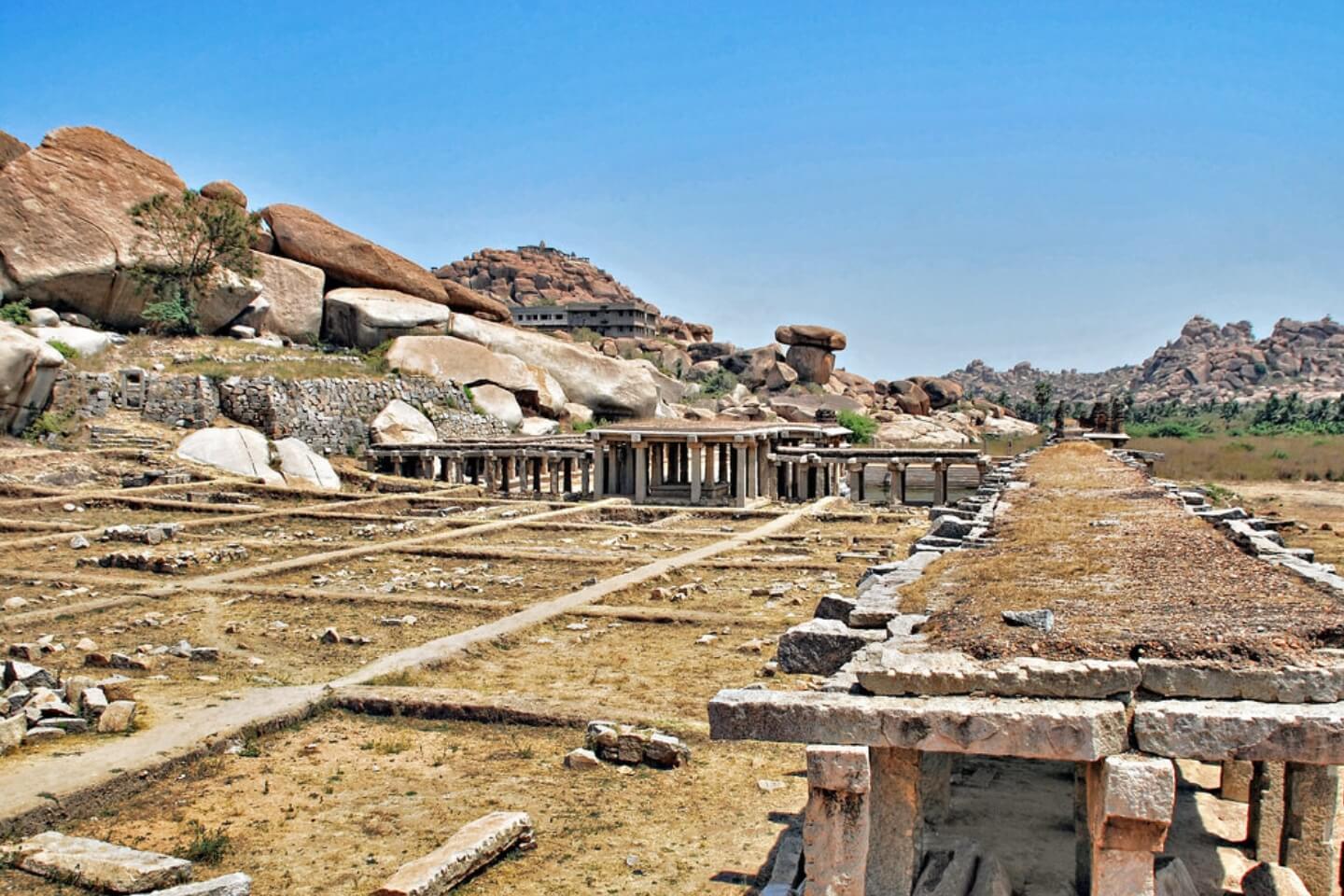
The Hampi Bazaar, a ruined market street stretching nearly a kilometer from the Virupaksha Temple, was once a thriving hub for gems, spices, and horses. Colonnaded shops line the path, with broad roads for chariots during festivals. Similar bazaars exist near other temples, underscoring the commercial vibrancy of the Hampi Ruins.
Other must-see sites include the Hemakuta Hill temples, with pre-Vijayanagara shrines and monolithic Ganesha statues; the Krishna Temple, featuring a massive Narasimha monolith; and the Achyutaraya Temple, known for its Ramayana reliefs. The Mahanavami Dibba, a multi-tiered platform, hosted royal ceremonies, while water structures like stepped tanks demonstrate advanced hydraulics in the Hampi Ruins.
Architectural Splendor and Cultural Significance of the Hampi Ruins
The architecture in the Hampi Ruins is a masterpiece of Dravidian style, characterized by vimanas (towering superstructures), mandapas (pillared halls), and detailed bas-reliefs depicting gods, battles, and daily life. Materials like granite and schist allowed for durable, intricate carvings, while Indo-Islamic influences appear in secular buildings, showing cultural synthesis.
Culturally, the Hampi Ruins represent a multi-religious society, with Hindu, Jain, and even Muslim monuments coexisting. Temples dedicated to Shiva, Vishnu, and deities like Ganesha reflect Vaishnavism and Shaivism, while erotic sculptures symbolize fertility and tantric traditions. The site's link to the Ramayana adds mythological depth, making the Hampi Ruins a spiritual nexus.
Economically, the Hampi Ruins thrived on trade, fostering arts like classical music and dance. Today, they inspire studies in archaeology and heritage, symbolizing India's resilient cultural legacy.
Planning Your Visit to the Hampi Ruins
Visiting the Hampi Ruins requires preparation, as the site is vast and rugged. The nearest town is Hosapete (Hospet), 13 km away, with rail and bus connections from major cities like Bangalore (350 km) and Goa (315 km). Hubli Airport (143 km) offers flights.
Entry to core monuments costs INR 40 for Indians and INR 600 for foreigners, with free access to many areas. Rent bicycles, scooters, or hire auto-rickshaws to navigate; guided tours are recommended for historical context.
Accommodations range from budget guesthouses in Hampi village to luxury resorts in Hosapete. Respect local customs—dress modestly in temples and avoid climbing ruins.
Best Time to Explore the Hampi Ruins
The ideal time to visit the Hampi Ruins is October to March, when temperatures range from 15-30°C, perfect for exploration. Avoid summers (April-June), which exceed 40°C, and monsoons (July-September), when flooding can occur. Winter festivals like Hampi Utsav in January showcase music, dance, and light shows, enhancing your experience in the Hampi Ruins.
Festivals and Living Traditions in the Hampi Ruins
The Hampi Ruins come alive during festivals, blending ancient rituals with modern celebrations. The Virupaksha Temple's car festival in March-April features processions with decorated chariots. Maha Shivaratri draws devotees for night vigils, while Dasara echoes historical parades.
Local communities maintain traditions like boulder climbing and coracle rides on the Tungabhadra, adding adventure to your Hampi Ruins visit.
Conservation Efforts for the Hampi Ruins
Preserving the Hampi Ruins involves ongoing work by the ASI, UNESCO, and the Hampi World Heritage Area Management Authority (HWHAMA). Initiatives include GIS mapping, risk assessments, and community involvement to combat erosion, vandalism, and urbanization. Excavations continue, uncovering artifacts that enrich our understanding of the Hampi Ruins.
Sustainable tourism is key—visitors are encouraged to follow "leave no trace" principles to protect this fragile heritage.
Disclaimer
This article is intended for informational and educational purposes only. While every effort has been made to ensure accuracy based on reliable sources, the information may change over time. Visitors to the Hampi Ruins should consult official tourism websites, local authorities, or professional guides for the latest updates on entry fees, regulations, and safety. The author and publisher are not responsible for any loss, injury, or inconvenience incurred during travel. Always respect cultural sites and adhere to ethical tourism practices.
FAQs
What makes the Hampi Ruins a UNESCO World Heritage Site?
The Hampi Ruins were inscribed by UNESCO in 1986 for their exceptional architecture, testimony to the Vijayanagara civilization, and integration with the natural landscape.
How many days do I need to explore the Hampi Ruins?
Plan at least 2-3 days to cover major sites like Virupaksha and Vittala Temples, with more time for hiking and photography in the Hampi Ruins.
Are there entry fees for the Hampi Ruins?
Yes, tickets for key monuments cost INR 40 for Indians and INR 600 for foreigners, valid for one day. Many areas in the Hampi Ruins are free.
What is the best way to get around the Hampi Ruins?
Bicycles or scooters are popular for the terrain; auto-rickshaws and guided tours are also available to navigate the expansive Hampi Ruins.
Can I visit the Hampi Ruins during the monsoon?
It's possible but not recommended due to heavy rains and slippery paths; opt for winter for a comfortable exploration of the Hampi Ruins.
Are there accommodations within the Hampi Ruins?
Limited guesthouses exist in Hampi village, but most options are in nearby Hosapete for a stay near the Hampi Ruins.
What should I wear when visiting temples in the Hampi Ruins?
Modest clothing covering shoulders and knees is advised, especially in active temples like Virupaksha within the Hampi Ruins.
Is photography allowed in the Hampi Ruins?
Yes, but drones require permission, and tripods may be restricted in certain monuments of the Hampi Ruins.
What other attractions are near the Hampi Ruins?
Nearby sites include Anegundi village, Badami caves (140 km), and the Tungabhadra Dam, complementing your Hampi Ruins trip.
How can I contribute to conserving the Hampi Ruins?
Follow site rules, avoid littering, and support local eco-tourism initiatives to preserve the Hampi Ruins for future generations.
References
- UNESCO World Heritage Centre. "Group of Monuments at Hampi." Accessed via and .
- Wikipedia. "Hampi." Accessed via and .
- TripAdvisor. "Hampi Ancient Ruins." .
- Karnataka Tourism. "Hampi." .
- The Culture Trip. "The 14 Best Places To Visit In Hampi." .
- 7 Wonders. "Hampi." .
- Artnet News. "Huge! The Soaring Towers and Relics of the Ancient Indian Megalopolis of Hampi." .
- YouTube. "Hampi: The UNESCO World Heritage Site | Top Monuments Walkthrough." .
- TripAdvisor. "THE 10 BEST Hampi Sights & Historical Landmarks." .
- Travel + Leisure Asia. "A Road Trip Through Karnataka's UNESCO World Heritage Sites." .
- Facebook. "Exploring ancient temples in Hampi." .
- Re-Thinking The Future. "UNESCO World Heritage Sites: Monuments in Hampi." .
- WorldAtlas. "Hampi - Unique Ruins Of The Vijayanagara Empire." .
- YouTube. "Exploring the Majestic Ruins of Hampi: A Journey Through Time." .
- Instagram. "Some places stay in your heart! Save for later Hampi..." .
- Outlook Traveller. "Ancient Ruins & Architecture of Erstwhile Vijayanagara." .
- Pikme. "Top 5 Must-See Ruins | Explore Hampi's Ancient Wonders - 2026 (Updated)." .
- Tata Neu. "10 Must-See Wonders of Hampi World Heritage Site." .
- Wikipedia. "Hampi (town)." .
- Deccan Heritage Foundation. "Hampi: Vijayanagara Empire Capital." .


No comments:
Post a Comment