
Agra Fort: Architecture and Connection to the Taj Mahal
As the first rays of dawn pierced through the misty veil over the Yamuna River, I stood at the threshold of Agra Fort, feeling the weight of centuries pressing upon me. The red sandstone walls glowed like embers in the morning light, whispering tales of emperors, battles, and undying love. Agra Fort, often overshadowed by its ethereal neighbor, the Taj Mahal, is a masterpiece in its own right, a fortress that has witnessed the rise and fall of the Mughal Empire. My journey to Agra Fort began as a quest to understand not just its imposing architecture but also its profound connection to the Taj Mahal, a link forged in history, tragedy, and architectural brilliance.
In this travel story, I'll take you through the labyrinthine corridors of Agra Fort, exploring its architectural wonders and unraveling the threads that bind it to the Taj Mahal. Whether you're a history buff, an architecture enthusiast, or a wanderer seeking inspiration, Agra Fort offers a portal to India's glorious past. Join me as we delve into the heart of this UNESCO World Heritage Site, where every stone tells a story.

The Historical Tapestry of Agra Fort
Agra Fort's history is as layered as its architecture. Originally built as a brick fort by the Rajputs in the 11th century, it was reconstructed by the Mughal Emperor Akbar in 1565. Akbar, known for his military prowess and cultural syncretism, transformed Agra Fort into a grand palace-fortress, making it the imperial residence of the Mughals until 1638, when the capital shifted to Delhi.
Under Akbar's reign, Agra Fort became a symbol of power and opulence. He employed over 4,000 builders who toiled for eight years to erect its massive walls, which stretch over 2.5 kilometers and rise to 21 meters high. The fort's crescent shape, surrounded by a moat, was designed for defense, with bastions and battlements that could withstand sieges. But Agra Fort was more than a military stronghold; it was a city within a city, housing palaces, mosques, and gardens.
Akbar's grandson, Shah Jahan, further embellished Agra Fort with white marble structures, blending Persian, Islamic, and Hindu architectural elements. Shah Jahan, the same emperor who commissioned the Taj Mahal, added luxurious pavilions and halls, turning parts of Agra Fort into a paradise of marble and precious stones. However, irony struck when his son Aurangzeb imprisoned him in Agra Fort's Musamman Burj, from where he spent his last days gazing at the Taj Mahal across the river.
The British later used Agra Fort as a military garrison during colonial times, but its Mughal essence remains intact. Today, Agra Fort stands as a testament to the empire's grandeur, attracting millions of visitors who come to trace the footsteps of legends.
Unveiling the Architecture of Agra Fort
The architecture of Agra Fort is a harmonious fusion of Indo-Islamic styles, reflecting the cultural diversity of the Mughal era. As I entered through the Amar Singh Gate—the only public entrance today—I was struck by the fort's imposing red sandstone facade, intricately carved with geometric patterns and floral motifs.
The Grand Entrances and Walls
Agra Fort's walls are its first line of defense and aesthetic appeal. Built primarily from red sandstone sourced from Rajasthan, they feature double ramparts with loopholes for muskets and cannons. The Delhi Gate, though not accessible to visitors, is a masterpiece with its arched portal adorned with marble inlays and Persian inscriptions.
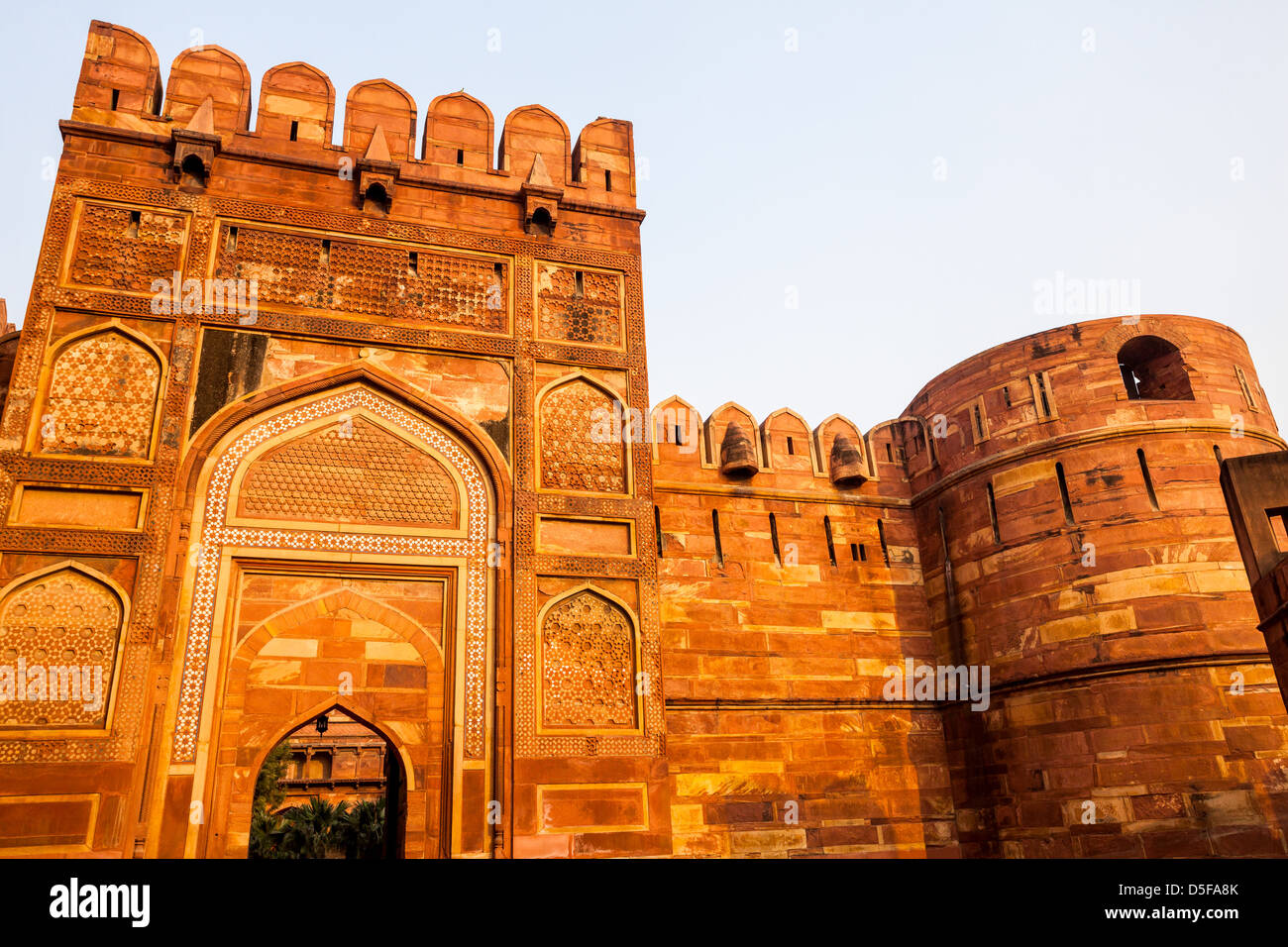
Inside, the fort unfolds like a treasure chest. The Jahangiri Mahal, built by Akbar for his Rajput wives, showcases Hindu architectural influences with its brackets shaped like elephants and peacocks. This palace is a red sandstone marvel, with courtyards, balconies, and rooms that once echoed with royal laughter.
Halls of Audience: Diwan-i-Am and Diwan-i-Khas
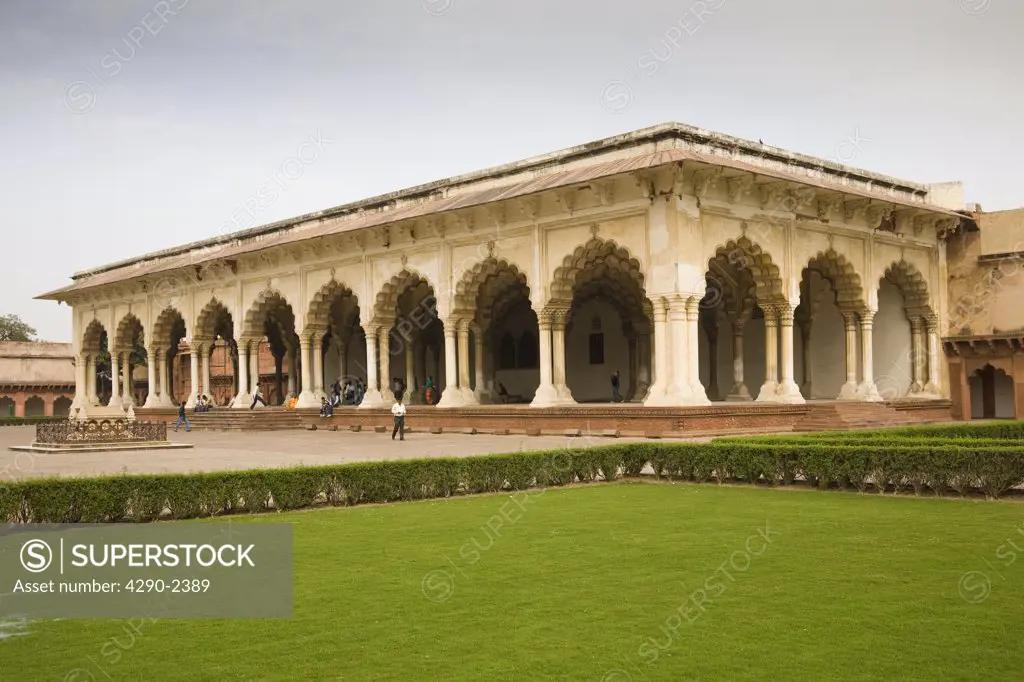
No visit to Agra Fort is complete without exploring the Diwan-i-Am (Hall of Public Audience). This open pavilion, supported by 40 pillars, was where emperors addressed their subjects. Shah Jahan enhanced it with marble throne alcoves inlaid with semi-precious stones using the pietra dura technique—similar to that in the Taj Mahal.
Adjacent is the Diwan-i-Khas (Hall of Private Audience), reserved for nobility and foreign dignitaries. Its marble walls and ceilings are adorned with gold and silver leaf, creating an aura of exclusivity. The famous Peacock Throne, once housed here, was a symbol of Mughal wealth before being looted by Nadir Shah.
Palaces and Pavilions: Khas Mahal and Musamman Burj
The Khas Mahal, Shah Jahan's private palace, is a white marble gem within the red sandstone fort. Its three pavilions overlook the Yamuna, featuring fountains, gardens, and intricate jali screens that allow breezes to cool the interiors. The central pavilion, with its curved Bengali roof, exemplifies Mughal innovation in climate control.
The Musamman Burj, or Octagonal Tower, is perhaps the most poignant structure in Agra Fort. Built by Shah Jahan for his beloved wife Mumtaz Mahal, it offers panoramic views of the Taj Mahal. Its marble lattices, inlaid with carnelian and lapis lazuli, create a play of light and shadow. This is where Shah Jahan was imprisoned, spending his final years in luxury yet isolation, his eyes fixed on the monument of love he built for his wife.
Mosques and Gardens: Spiritual and Serene Spaces
Agra Fort houses the Moti Masjid (Pearl Mosque), a pristine white marble mosque built by Shah Jahan. Its domes and minarets gleam like pearls, hence the name, and its prayer hall can accommodate thousands. The mosque's architecture mirrors the Taj Mahal's symmetry and elegance.
The gardens within Agra Fort, such as the Anguri Bagh (Grape Garden), are laid out in the charbagh style—divided into quadrants symbolizing paradise. Once filled with grapevines and fountains, these gardens provided respite for the royals. Walking through them, I imagined empresses strolling under the shade of cypress trees, the air scented with jasmine.

The architecture of Agra Fort evolves from Akbar's robust red sandstone to Shah Jahan's refined marble, showcasing the Mughal progression towards opulence. Inlays of gold, silver, and gems, along with Persian carpets and silk hangings (now lost to time), once made Agra Fort a veritable paradise on earth.
The Eternal Connection: Agra Fort and the Taj Mahal
Agra Fort and the Taj Mahal are inextricably linked, not just by proximity but by the life and legacy of Shah Jahan. Situated about 2.5 kilometers apart along the Yamuna River, they form a narrative of love, power, and tragedy.
Shah Jahan commissioned the Taj Mahal in 1632 as a mausoleum for Mumtaz Mahal, who died during childbirth. While the Taj Mahal represents eternal love, Agra Fort was the seat of his power,r where he planned and oversaw its construction. From Agra Fort's balconies, Shah Jahan could monitor the progress of the Taj Mahal, ensuring every detail met his vision.
The architectural connection is evident: both feature white marble, pietra dura inlays, and symmetrical designs influenced by Persian and Islamic styles. The Taj Mahal's chief architect, Ustad Ahmad Lahori, also contributed to Agra Fort's marble additions. Materials like Makrana marble were used in both, creating a visual harmony.
But the deepest bond is personal. After Aurangzeb's coup in 1658, Shah Jahan was confined to Agra Fort's Musamman Burj. For eight years, he gazed at the Taj Mahal, a daily reminder of his lost love. Legend says he died with his eyes fixed on it, his body later interred beside Mumtaz. This tragic tale adds a layer of melancholy to Agra Fort, making it more than stone—it's a witness to human emotion.

Visiting both sites in one day reveals their synergy. The robust, earthly tones of Agra Fort contrast with the Taj Mahal's ethereal white, yet they complement each other, telling a complete story of Mughal splendor.
A Traveler's Tale: Wandering Through Agra Fort
My day at Agra Fort began at sunrise. The air was crisp, carrying the scent of the river as I queued for tickets. Entering through the Amar Singh Gate, I felt like stepping into a time machine. The fort's vastness overwhelmed me—94 acres of history to explore.
I started at Jahangiri Mahal, marveling at its red sandstone carvings. The morning light cast long shadows, highlighting the intricate details. Moving to Diwan-i-Am, I imagined Akbar dispensing justice from his throne. Tourists milled about, their whispers echoing off the pillars.
The highlight was Musamman Burj. Standing there, with the Taj Mahal shimmering in the distance, I felt Shah Jahan's sorrow. The view was breathtaking—the river bending gracefully, the white dome rising like a dream. I spent hours wandering the gardens, sitting by fountains, and absorbing the serenity.
As the sun set, Agra Fort's walls turned golden. Monkeys scampered along battlements, and birdsong filled the air. Leaving, I carried not just photos but a deeper appreciation for this living monument.
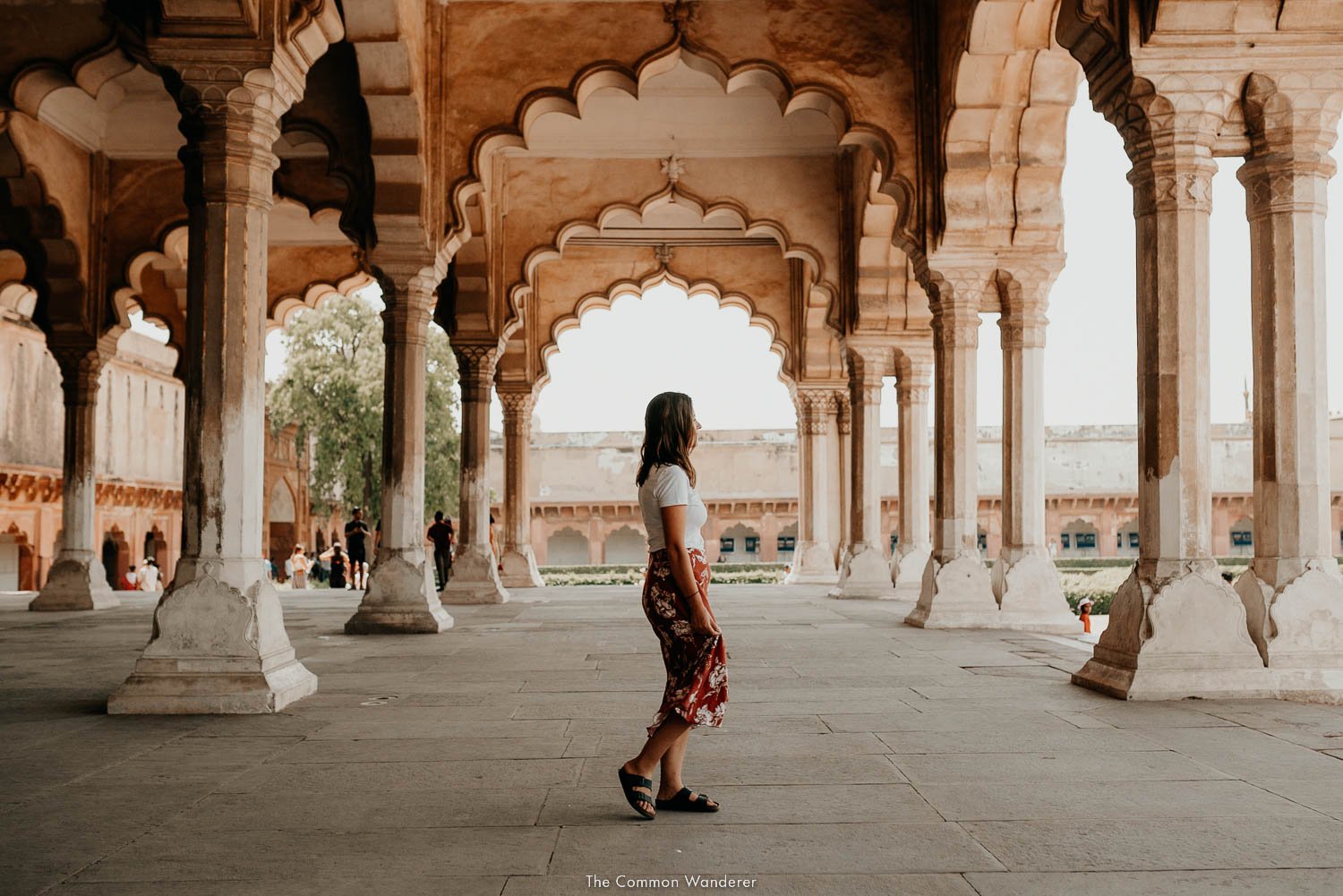
Tips for visitors: Wear comfortable shoes, as there'a lot of walking. Hire a guide for stories that bring Agra Fort alive. Visit early to avoid crowds, and combine with the Taj Mahal for a full day.
Success Stories from Agra Fort
Agra Fort has inspired countless success stories. One is the preservation efforts by the Archaeological Survey of India (ASI). In the 1990s, pollution threatened the fort's sandstone. Through international collaboration, including UNESCO, restoration projects cleaned facades and reinforced structures, ensuring Agra Fort's longevity.
Tourist tales abound. Sarah, a backpacker from the UK, visited Agra Fort in 2024. "It changed my perspective on history," she shared. "From the views of Taj Mahal to the carvings, it was transformative." Her blog post went viral, inspiring thousands to visit.
Local artisans have revived pietra dura crafts, selling replicas near Agra Fort. Ramesh, a craftsman, says, "Agra Fort's legacy sustains our families." These stories highlight Agra Fort's role in cultural and economic revival.
Another success is eco-tourism initiatives. Solar-powered lights and waste management have made Agra Fort sustainable, earning awards for green heritage.
Disclaimer
This article is for informational purposes only. Travel plans should consider current advisories, health guidelines, and personal safety. Agra Fort is a historical site; respect rules like no littering or touching artifacts. The author is not liable for any issues arising from visits based on this content. Always verify ticket prices and timings.
FAQs
What is the best time to visit Agra Fort?
The ideal time is from October to March, when the weather is pleasant. Early mornings or late afternoons avoid heat and crowds.
How much does entry to Agra Fort cost?
For foreigners, it's INR 600; for Indians, INR 40. Children under 15 enter for free. Tickets include access to most areas.
Can I see the Taj Mahal from Agra Fort?
Yes, from Musamman Burj and other viewpoints, offering stunning vistas, especially at sunset.
Is Agra Fort wheelchair accessible?
Parts are, but uneven terrain may challenge mobility. Ramps exist in key areas.
How long does it take to explore Agra Fort?
Allow 2-3 hours for a thorough visit, more with a guide.
Are guides available at Agra Fort?
Yes, official guides offer tours in multiple languages for a fee.
What should I wear to the Agra Fort?
Comfortable, modest clothing. Cover shoulders and knees for respect.
Is photography allowed in the Agra Fort?
Yes, but drones and tripods need permission. No flash in interiors.
How to reach Agra Fort from Delhi?
By train (2 hours via Gatimaan Express) or car (3-4 hours via Yamuna Expressway).
Are there restrooms and eateries in Agra Fort?
Basic facilities exist, but options are limited. Carry water and snacks.
References
- Wikipedia - Taj Mahal: https://en.wikipedia.org/wiki/Taj_Mahal
- Smarthistory - The Taj Mahal: https://smarthistory.org/the-taj-mahal
- UNESCO - Taj Mahal: https://whc.unesco.org/en/list/252
- Taj Mahal Official - Agra Fort: https://www.tajmahal.gov.in/agrafort.aspx
- History.com - Taj Mahal: https://www.history.com/topics/taj-mahal
- Architectural Digest - Taj Mahal: https://www.architecturaldigest.com/story/the-taj-mahal-everything-you-need-to-know
- Machu Picchu - Agra Fort Guide: https://www.machupicchu.org/agra-fort-unesco-mughal-fortress-complete-guide.htm
- Britannica - Agra Fort: https://www.britannica.com/topic/Agra-Fort
- Indian Culture - Agra Fort: http://indianculture.gov.in/node/2801041
- Medium - More Than Taj in Agra: https://medium.com/the-heritage-pub/more-than-just-the-taj-mahal-in-agra-949f4d669e0d


No comments:
Post a Comment